You know that rare, magical moment when your preschooler is actually playing by themselves? Like, genuinely entertained for more than seven minutes? And you’re standing there thinking, “Do I dare start the laundry or will that break the spell?”
That’s independent play, and honestly, it’s one of the best skills your kid can develop. Not just because it gives you a chance to drink your coffee while it’s still lukewarm (the dream), but because it’s building their confidence, creativity, and ability to figure stuff out on their own. Pretty cool for something that just looks like playing with blocks.
The right toys make a huge difference here. I’m talking about the kind that kids actually come back to, not the ones that get played with once and then live under the couch forever. These are the toys that grow with your kid—your 3-year-old uses them one way, your 5-year-old invents twelve new ways, and somehow they’re still interesting.
Why Independent Play Is Kind of a Big Deal
When your 4-year-old figures out how to balance that tricky tower or creates an entire story with toy animals, they’re basically learning “hey, I can do stuff.” And that feeling? That’s confidence-building in real time.
This age is also when kids are developing executive function skills—basically the ability to plan, focus, and stick with something even when it’s challenging. Independent play is like a low-pressure practice gym for all of that. There’s no “wrong” way to stack blocks or arrange play silks, which means they can experiment without anyone hovering or correcting them.
Plus, the best part about quality open-ended toys? Your 3-year-old makes simple patterns with them, your 6-year-old builds elaborate structures, and you’re not constantly buying new stuff. Win-win-win.
What Actually Makes a Toy Good for Independent Play
The toys that work best for solo play all have something in common: there’s no instruction manual telling your kid exactly what to do. A set of wooden blocks can become a tower, a zoo, a parking garage, or a spaceship, depending on what your kid dreams up that afternoon. This flexibility = way longer play time.
Quality beats quantity every single time. One well-made wooden toy your kid actually plays with is worth ten plastic things that end up scattered across the playroom floor. Natural materials like wood also tend to create a calmer vibe than the bright plastic stuff (and they don’t make those loud clicking noises that haunt your dreams).
Look for toys that match where your kid is right now, but also have room to grow. You want something they can use successfully today but will challenge them in new ways next month. That sweet spot keeps them engaged without the “Mom, I need help!” every five minutes.
Our Top Picks for Independent Play
Tegu Magnetic Wooden Blocks Discovery Set
Amazon Affiliate Link: https://amzn.to/3YP7ZUE
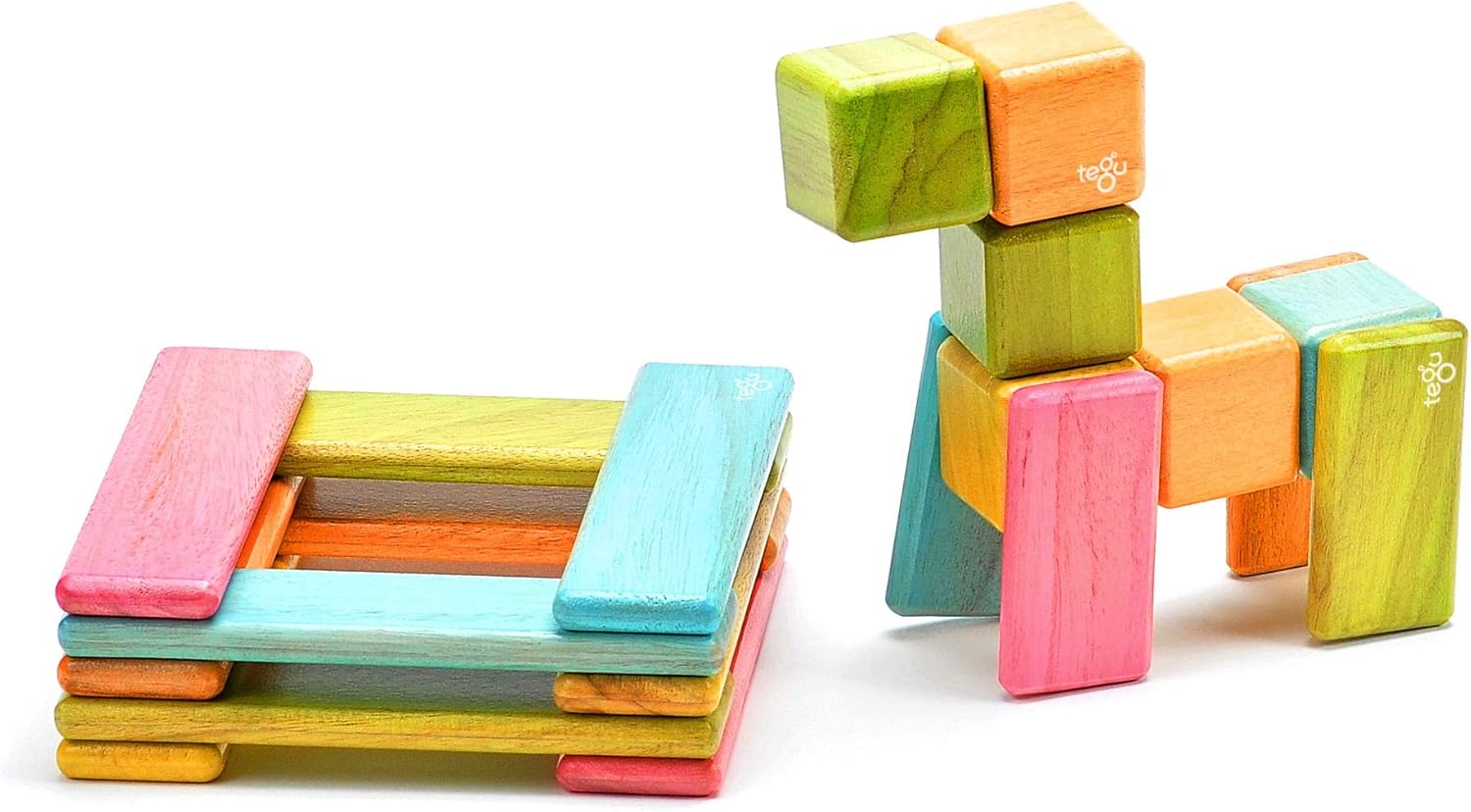
Okay, so these magnetic wooden blocks are kind of genius. They look like regular wooden blocks, but they have hidden magnets inside that let them stick together in ways that seem to defy physics. Your kid builds something, and instead of it toppling over for the fifteenth time, it actually stays together. Revolutionary.
What makes these really good for independent play is how forgiving they are. The magnets help structures hold, which means fewer frustrating collapses and more “look what I made!” moments. Kids as young as 3 can create simple designs, and by 5 or 6, they’re building elaborate things that make you wonder if you should be worried about your own engineering skills.
The set has 26 pieces in different shapes, and those have really pretty natural wood colors. Kids use them to build vehicles, animals, towers, abstract art—pretty much whatever. At around $80, yeah, it’s not cheap. But these are the toys that stick around for years, not the ones that break in three days and end up in the donate pile.
Schleich Farm World Animal Set
Amazon Affiliate Link: https://amzn.to/49KAsjh
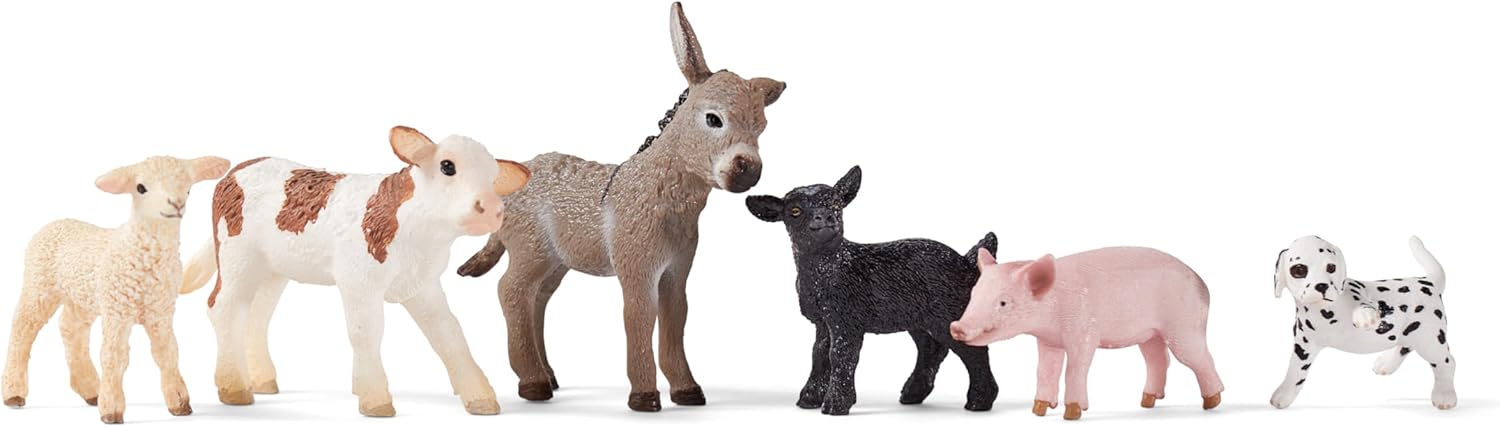
Sometimes the simplest toys are the most clutch. This set comes with 6 farm animals—a puppy, lamb, goat, piglet, calf, and donkey—and they’re surprisingly detailed for toy animals. Like, they actually look and feel real, which kids seem to really appreciate.
Farm animals are perfect for this age because preschoolers are naturally into caring for things and creating little worlds. Your kid might spend a solid 30 minutes setting up a farm, acting out feeding routines, or having the animals go on adventures. No batteries, no noise, just pure imagination fuel.
These figurines are really well made—hand-painted, weighted nicely, and basically indestructible. They’re the perfect size for little hands but substantial enough to feel special. They also work great combined with blocks for building barns or play silks for creating fields. At around $15, this is one of those purchases you won’t regret. Just prepare to be asked to look at their farm setup. Multiple times.
Sarah’s Silks Rainbow Play Silks Set
Amazon Affiliate Link: https://amzn.to/4sPuW7J

These are basically just three big squares of real silk in rainbow, sky blue, and purple colors. Sounds simple, right? But watch what happens when you give them to a preschooler.
They become capes. Then blankets for dolls. Then a river. Then a mountain. Then a fancy dress. Then, a tablecloth for a pretend picnic. It’s honestly impressive how many things kids can turn these into in the span of like, an hour.
The silk material is key here—it drapes and flows in a way that cheaper fabrics just don’t. It’s soft, it’s flowy, it’s basically irresistible to play with. You can hand-wash them when needed (which you will need to do), and they actually get softer over time. At $52 for three, they’re definitely pricier than the polyester versions. But if you’re going for quality stuff that gets used daily instead of forgotten in a toy bin, these are worth it.
Magna-Tiles Classic 100-Piece Set
Amazon Affiliate Link: https://amzn.to/3ZocxBq
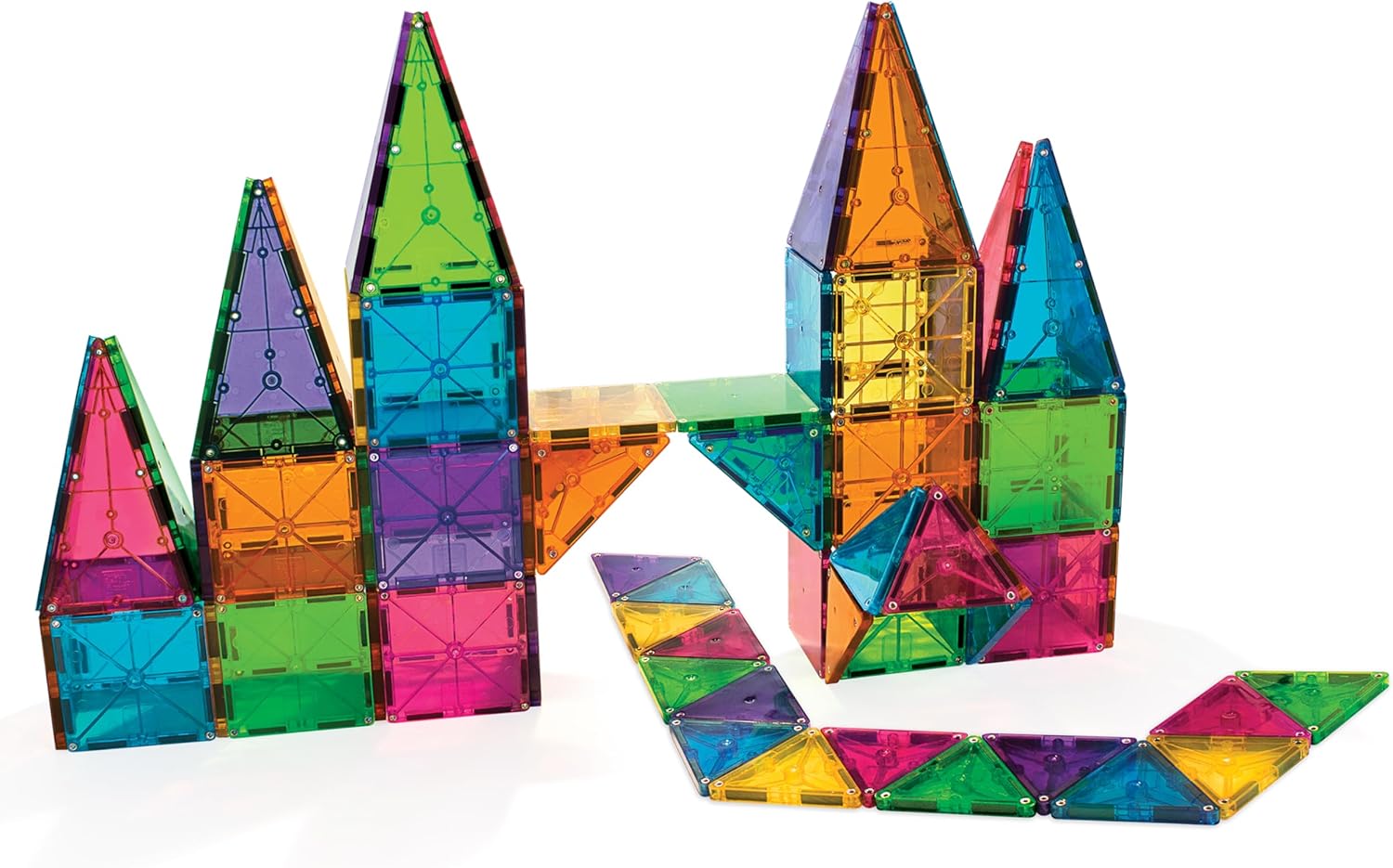
There’s a reason every preschool and playroom seems to have these. Magnetic tiles just work. The translucent colored shapes with magnetic edges make building stuff really intuitive and satisfying. That *click* when they connect? Chef’s kiss.
Even 3-year-olds can make successful squares and simple houses, which builds confidence fast. Then as they get older, they’re constructing elaborate castles and parking garages that you’re honestly kind of impressed by. The see-through colors also look really cool when light passes through them, which keeps kids engaged longer.
The 100-piece set gives you enough tiles for ambitious projects without being overwhelming. And they’re compatible with all Magna-Tiles sets, so you can add more later if (when) your kid becomes obsessed. At around $113, it’s a chunk of money. But ask any parent who has these—they’ll tell you it’s the toy that gets played with most. Worth it.
Pidoko Natural Wooden Building Blocks
Amazon Affiliate Link: https://amzn.to/3LXnhnc

Classic wooden blocks never go out of style, and this 100-piece set nails it. Natural beechwood, smooth finish, good weight—basically everything you want in building blocks. The set includes cylinders, arches, triangles, and the standard rectangles, so kids have options beyond just stacking squares.
Wooden blocks are honestly one of the best toys for developing spatial reasoning. Your kid learns about balance, gravity, and cause-and-effect while thinking they’re just building a tower. Plus, natural wood means these blocks play nicely with other wooden toys and random stuff kids want to incorporate (pine cones, toy cars, whatever).
The storage container has a shape sorter lid, which is clever because cleanup becomes its own activity. Kids practice matching shapes while putting things away—sneaky learning for the win. At $36, this is solid value for a classic toy that’ll be in your playroom for years. These get more interesting as building skills develop, so you’re not constantly buying new stuff.
Safari Ltd South American Animals Collection
Amazon Affiliate Link: https://amzn.to/3LRIVcB

This set has 8 South American animals—jaguar, sloth, harpy eagle, giant anteater, capybara, pink river dolphin, and caiman. These aren’t your typical farm animals, which is part of what makes them cool. Kids love discovering animals they haven’t seen before.
Animal figures are magic for independent play. Kids create habitats, act out behaviors, develop whole storylines—it’s like watching their imagination in real time. These are compact enough to carry around but detailed enough to feel special. They work great with blocks (building jungle environments) or play silks (creating rivers and vegetation).
Safari Ltd makes quality stuff that holds up to real play, and these are no exception. They’re also sneaky educational—kids naturally start asking questions about where these animals live and what they eat. At $15, this is one of those “just get it” purchases. The unique animal selection makes it feel more special than another generic farm set too.
LEGO Classic Creative Brick Box
Amazon Affiliate Link: https://amzn.to/4a4hzJr

This set has 790 pieces, which sounds like a lot but is actually perfect for this age range. LEGO is a good next step when kids are ready for more detailed building. Most 4-year-olds and up can handle regular LEGO bricks, especially with the larger pieces this set includes.
What’s great about LEGO for independent play is how much it rewards experimenting. The grid system means almost infinite combinations, and structures actually hold together well enough to be played with afterward. Kids can follow the idea booklets or freestyle it—both work.
The storage box helps keep pieces somewhat contained (let’s be honest, LEGO has a way of ending up everywhere regardless). At $39, it’s reasonable for the amount of building material you get. These bricks will see serious use for years, and they’re perfect for passing down to younger siblings eventually.
Setting Up for Success
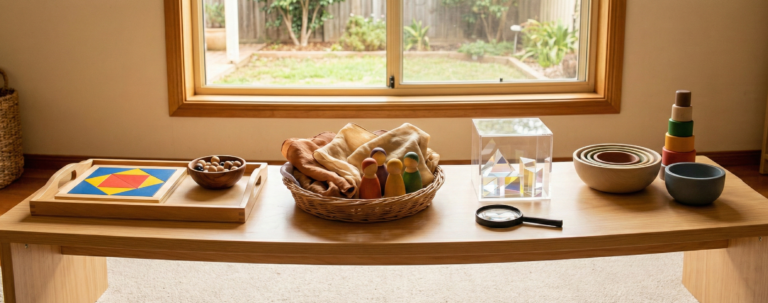
Having great toys is only half the equation. The environment matters too. Try organizing play materials so your kid can actually see what’s available—stuff buried in a toy chest might as well not exist. Rotating toys (only some out at once) often works better than having everything available all the time.
Natural light is surprisingly helpful for play quality. If you can set up near a window, do it. This is especially nice with toys like Magna-Tiles that look cool in sunlight. A small table at kid height gives them a dedicated workspace, though floor play is great too.
Here’s the hard part: resist jumping in to direct their play unless they ask. Independent play means actually letting them lead. They’ll create way more interesting stuff when they’re not following adult suggestions anyway. Being nearby and available is enough—your presence provides security while they explore their own ideas.