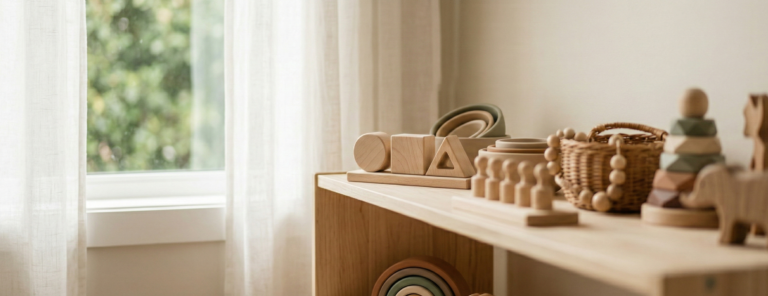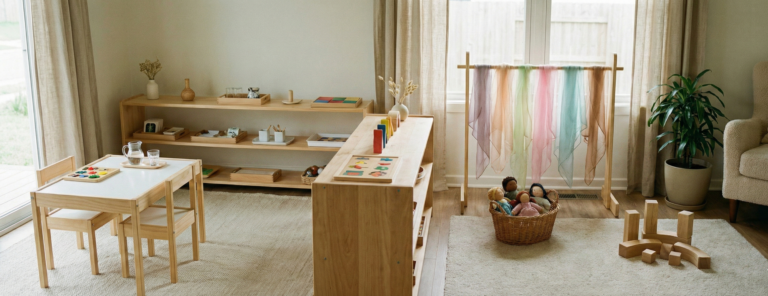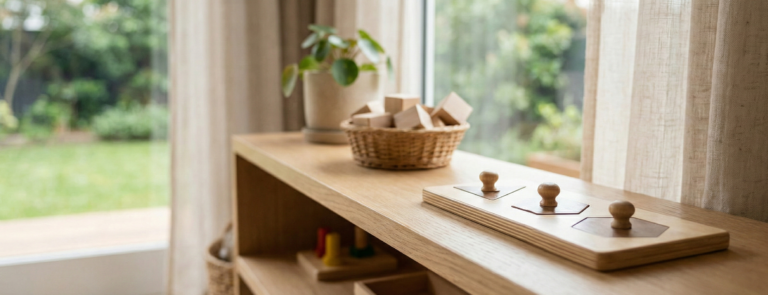
You’ve probably noticed: everything is “Montessori” now. Montessori busy boards. Montessori rainbow stackers. Montessori learning towers, climbing triangles, and approximately seven thousand wooden toys labeled with her name. Amazon is full of it. Pinterest is overflowing with it.
Here’s what’s worth knowing: Maria Montessori never designed most of the toys sold under her name today.
She wasn’t thinking about marketing. She was observing children—what captured their attention, what they returned to, what helped them develop concentration and real skills. So when you’re trying to figure out if something is “actually Montessori” or just clever branding, the label matters less than the principles behind it.
Let me show you what to look for instead.
What Makes Something Actually Montessori
It’s not about the name on the box. It’s about whether a material demonstrates these qualities:
Isolates one skill or concept
The child focuses on one thing at a time. A puzzle teaches shape matching. A pouring activity teaches hand-eye coordination. Not twelve things at once.
Self-correcting
The child can see their own mistakes without adult intervention. Nesting bowls only fit one way. A puzzle piece either fits or it doesn’t. The material itself provides feedback.
Invites repetition
Designed for practice, not one-time novelty. Children return to it again and again because the activity satisfies something developmental.
Uses real, natural materials
Wood, metal, glass, fabric. Not plastic when a better material serves the same purpose. Materials should feel substantial and real.
Serves a clear purpose
Every material supports a specific developmental function. It’s not just “keeps them busy.” It builds a particular skill.
Beautiful and simple
Aesthetically calm. No cartoon characters. No flashing lights. Nothing is competing for attention except the activity itself.
The real test:
Can your child use this independently?
Does it support a real skill?
Does it invite focus rather than frenzy?
If yes to those three, it’s aligned—regardless of what the packaging says.
When “Montessori” Toys Miss the Mark
Some products wear the label without honoring the principles. Here’s what to watch for:
It makes noise or requires batteries
Montessori materials are quiet. They let the child control the experience, not a pre-programmed sequence of sounds and lights.
It does the work for the child
Auto-stacking toys, one-button solutions, anything that removes the challenge also removes the learning opportunity.
It’s overly decorated or character-branded
Cartoon faces, bright patterns, licensed characters—these pull focus away from the activity itself.
It tries to do too much at once
Busy boards that include locks, latches, zippers, switches, beads, mirrors, and wheels all on one board? That’s not isolating a skill. That’s overstimulation.
It’s plastic when wood would work
This isn’t about purity. It’s about sensory experience. Wood feels different. It weighs differently. It invites a different quality of engagement.
It’s designed for parent entertainment
If the toy is more impressive to adults than useful to children, question it.
Reality check: A simple wooden puzzle that gets used daily beats an expensive “Montessori learning system” that sits untouched.
One thoughtfully chosen material used deeply is worth ten purchased and forgotten.
What Actually Supports Development (With Examples)
Here’s what the principles look like in practice.
1. Object Permanence Box

What it does:
Child drops ball in hole. Ball disappears. Ball reappears in the drawer below.
Why it works:
Around 8-12 months, children are working on understanding that objects exist even when they can’t see them. This material isolates that concept beautifully.
It’s self-correcting—the ball either goes in the hole or it doesn’t. The child controls the entire sequence: drop ball, open drawer, retrieve ball, repeat. No adult intervention needed. Just focus, practice, mastery.
What makes it Montessori-aligned:
Isolates one skill (cause and effect), invites endless repetition, made from natural wood, simple design with one clear purpose.
Example: Wooden Object Permanence Box with Ball – $25
Age range: 8-18 months
2. Wooden Stacking and Nesting Boxes

What it does:
A set of wooden boxes in graduated sizes that stack on top of each other or nest inside one another.
Why it works:
This teaches size relationships and spatial reasoning through direct experience. The child discovers through trial that the boxes follow a specific order. Stack them incorrectly, and the tower becomes unstable. Try to nest a larger box inside a smaller one, and it simply won’t fit. The material itself corrects the error.
Children return to these repeatedly because the challenge evolves with their developing skills. Early on, they’re working on basic nesting—getting each box into the right spot. As they grow, they experiment with stacking height, building patterns, using the boxes as containers for sorting small objects, or incorporating them into imaginative play as buildings, tunnels, or hiding spots.
The open-ended nature means the material grows with the child without needing to be replaced. What a two-year-old uses for simple stacking becomes a four-year-old’s construction system.
What makes it Montessori-aligned:
Self-correcting through physical constraints (only one correct nesting order, unstable stacking signals errors), natural wood material, serves clear purposes (understanding size relationships, order, and spatial reasoning), and invites both focused practice and creative exploration.
Example: Wooden Stacking and Nesting Boxes – Educational Set – $37
Age range: 18 months – 5 years
3. Practical Life: Child-Size Cleaning Tools

What it does:
Real broom, dustpan, and mop—just sized for small hands.
Why it works:
Practical life activities are the heart of Montessori for young children. These aren’t pretend toys. They’re real tools that let children participate in actual household work.
When your two-year-old sweeps crumbs they spilled, they’re not just cleaning. They’re developing coordination, building independence, learning to complete a task from beginning to end, and experiencing the satisfaction of contributing meaningfully to the household.
What makes it Montessori-aligned:
Real materials serving a real purpose, supports independence, invites repetition (there’s always something to clean), builds practical skills.
A note on finding these:
Most commercial “child cleaning sets” don’t work well. The Melissa & Doug set, while wooden, has handles that are too lightweight and broom bristles that don’t actually sweep effectively. Children notice when tools don’t function properly—it undermines the entire purpose.
Instead, consider sourcing individual pieces: a small real broom from a hardware store, a child-height mop (IKEA sometimes carries these), and a metal dustpan that actually works. You’re looking for tools that function like adult versions, just appropriately sized.
If that feels like too much effort right now, that’s completely fine. A damp cloth that your child can access independently and permission to wipe their own spills accomplishes the same developmental goals.
Age range: 18 months – 5 years
The principle matters more than the product: Real participation in household tasks builds competence. The tools just need to actually work.
Examples:
Small Broom for Kids and Toddlers – $32
Table Sweeping Set – $9
Toddler Spray Mop Toy Set – $30
Black Metal Dustpan – $13
4. Counting Peg Board with Numbers

What it does:
Wooden boards displaying numbers 1-10, each with corresponding holes for placing wooden pegs.
Why it works:
This material combines fine motor practice with early number recognition—but the real learning happens in the hands, not the counting.
Children place pegs in holes, which develops pincer grasp, hand-eye coordination, and the focused attention required for precise placement. The numbered boards add a layer of interest (matching quantity to numeral) without overwhelming the core activity.
What makes this particularly effective is how it supports children at different developmental stages. A two-year-old might simply practice peg placement, ignoring the numbers entirely. A three-year-old begins noticing the relationship between the numeral and the number of holes. A four-year-old creates patterns or organizes the boards in sequence.
The material doesn’t demand one correct use. It invites exploration at whatever level the child brings to it.
What makes it Montessori-aligned:
Isolates fine motor practice while introducing mathematical concepts naturally, self-correcting (each board has a specific number of holes), uses natural wood, invites repetition and varied use across developmental stages.
Example: Counting Peg Board – Montessori Math Material (Natural Wood) – $33
Age range: 2-5 years
Note: The natural wood version shows wear over time in a way that feels honest—unlike painted versions where chipped paint looks broken. Choose the finish that will age well in your home.
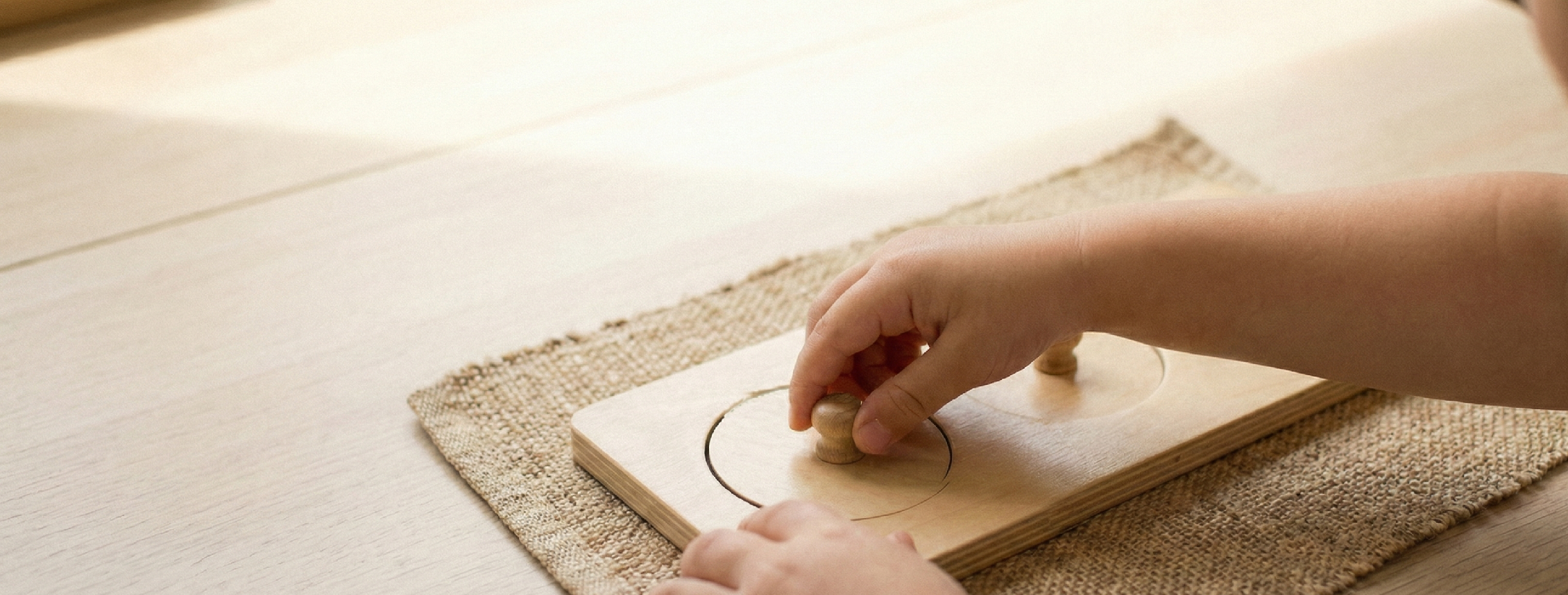
5. Knobbed Wooden Puzzle

What it does:
Simple puzzle with 3-5 large pieces, each with a knob for grasping.
Why it works:
First puzzles should teach one thing: shape matching. Not counting, not alphabet recognition, not animal sounds. Just the concept that specific shapes fit in specific spaces.
The knobs support developing pincer grasp (thumb and finger). The self-correcting nature means the child knows immediately whether they’ve succeeded. No adult needed to say “good job” or “try again.” The material itself provides that feedback.
What makes it Montessori-aligned:
Isolates one concept, self-correcting, natural wood, appropriately challenging for the developmental stage.
Example: Wooden Puzzles for Toddlers 1 to 2 – $20
Age range: 12-24 months
What You Don’t Actually Need
Permission to skip:
The $200 climbing triangle
Unless you have space, will really use it, and it aligns with your child’s current interests. Montessori doesn’t require expensive furniture.
Every single “essential” material
Classrooms need comprehensive materials covering the full curriculum. Homes don’t. Choose what serves your specific child right now.
Perfect aesthetic matching
Your child doesn’t care if everything coordinates in beige and cream. They care whether materials are accessible and interesting.
The newest trending toy
Just because it says “Montessori” and everyone on Instagram has it doesn’t mean your child needs it.
Remember: One thoughtfully chosen material used deeply is worth ten purchased and forgotten.
Often, the best Montessori activities don’t require buying anything new. A pitcher of water, a sponge, and permission to pour. A basket of natural objects to sort. A low shelf with three well-chosen materials instead of a bin overflowing with options.
How to Choose (Your Simple Framework)
Before purchasing anything—or before feeling guilty about what you don’t have—ask:
1. Can my child use this without my help?
If it requires constant adult involvement, it’s not supporting independence.
2. Does it serve a clear purpose?
Not just “keeps them busy.” What specific skill does it build?
3. Will it invite repeated use?
One-time novelty or sustained engagement over weeks and months?
4. Does it match where my child is right now?
Not where you wish they were or where the box says they should be. Right now.
5. Is it simple enough to focus attention?
Or does it overstimulate with too many features, sounds, or competing elements?
If you can answer yes to most of these, you’re aligned with the principles that matter—label or not.
The Bigger Picture
Montessori isn’t about buying the right toys.
It’s about preparing an environment that says “you are capable” and then stepping back enough to let your child prove it.
Sometimes that environment includes a carefully chosen wooden puzzle. Sometimes it includes a pitcher of water and a sponge. Sometimes it’s just a clear, uncluttered shelf with three materials instead of thirty.
The label matters far less than the intention behind what you choose.
Trust yourself.
Observe your child.
Choose less, choose better.
That’s the work.
Disclaimer
This post contains Amazon affiliate links. When you purchase through these links, I may earn a small commission at no additional cost to you. This supports the site and allows me to continue sharing thoughtful recommendations. I only recommend materials that align with developmental principles and that I would feel good about in my own home.