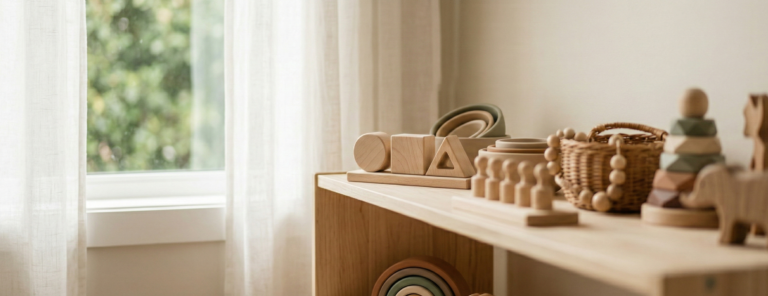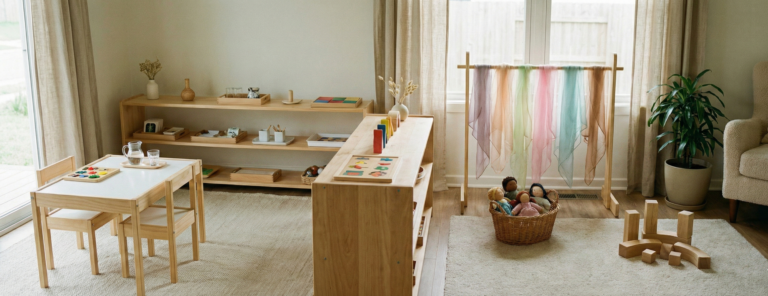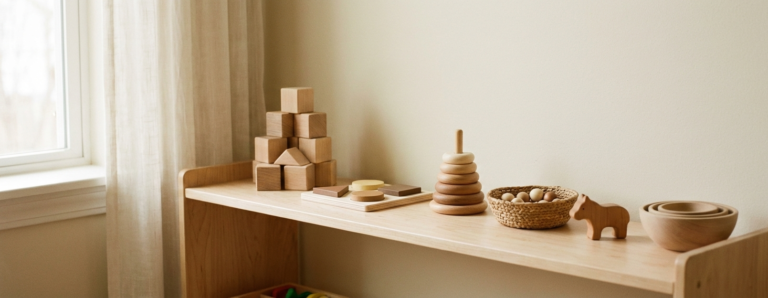
You’ve seen the Instagram posts. The perfectly curated toy shelves with everything wooden, neutral-toned, and labeled “Montessori.”
You’ve browsed Amazon. Hundreds of products with “Montessori” in the title—sometimes attached to things that make you wonder if the sellers actually know what Montessori means.
So what actually makes a toy “Montessori”?
Is it the material? The price tag? The aesthetic? Whether it comes in a pretty wooden box?
Let me save you some confusion: Montessori isn’t a toy brand. It’s a set of principles about how children learn.
Some toys align with those principles beautifully. Others slap “Montessori” on the label and hope you won’t notice they’re basically the opposite of what Maria Montessori recommended.
Here’s how to tell the difference.
What “Montessori” Actually Means
Before we talk about toys, let’s establish what we’re even discussing.
Maria Montessori was an Italian physician and educator who observed children intensely in the early 1900s. She noticed patterns in how they naturally learned, and designed educational materials that supported those patterns.
Her core observations:
Children learn through direct sensory experience, not abstract instruction. They’re drawn to real, purposeful work, not make-believe versions. They develop independence when the environment supports it, not when adults constantly intervene. They refine skills through repetition, not one-time exposure.
So when we talk about “Montessori toys,” we’re really asking: Does this material align with how children naturally learn, or does it work against it?
The 6 Principles That Actually Matter
If a toy meets most of these criteria, it’s functionally Montessori—regardless of whether the package says so.
1. It Isolates One Skill or Concept
The principle:
Montessori materials teach one thing at a time. A puzzle teaches shape matching. Threading beads teaches hand-eye coordination. A pouring activity teaches control and cause-and-effect.
Why this matters:
When a toy tries to teach colors, numbers, letters, shapes, and animal sounds all at once, the child’s brain can’t focus on any one thing. They experience sensory overwhelm, not learning.
What this looks like:
✅ Montessori-aligned:
A simple wooden puzzle with 4-6 pieces, each representing one distinct shape or object. The child learns spatial relationships and shape recognition.
❌ Not Montessori:
A puzzle that plays music when pieces are placed, lights up in different colors, and announces the alphabet. The puzzle-solving skill is buried under electronic stimulation.
The test: Can you explain what this toy teaches in one sentence? If you need three sentences, it’s probably doing too much.
2. It’s Self-Correcting
The principle:
The best Montessori materials provide their own feedback. The child knows whether they succeeded or need to try again—without adult judgment.
Why this matters:
When materials correct themselves, children learn to trust their own assessment. They don’t need constant validation from adults (“Good job!” “That’s right!” “Try again!”). This builds internal motivation and confidence.
What this looks like:
✅ Montessori-aligned:
A puzzle where pieces fit only in their designated spots. If the triangle doesn’t fit in the square hole, the child knows immediately to try a different piece. The material provides the feedback.
✅ Another example:
Nesting boxes where larger boxes won’t fit inside smaller ones. The child discovers through direct experience that size matters and there’s a logical order.
❌ Not Montessori:
A toy that requires adult confirmation (“Is this right, Mom?”) or gives arbitrary positive feedback regardless of what the child does (lights and sounds when any button is pressed).
The test: If the adult leaves the room, can the child still tell whether they’re using the material successfully?
3. It Uses Real, Natural Materials When Possible
The principle:
Montessori emphasized natural materials—wood, metal, glass, fabric—over plastic. Not for aesthetic reasons (though yes, it looks nicer), but because natural materials provide richer sensory information.
Why this matters:
Wood has weight, texture, temperature. Glass has transparency and fragility (which teaches care). Metal has cool-to-touch smoothness. These sensory qualities inform the developing brain about the physical world.
Plastic feels the same whether it’s representing a carrot or a car. It’s light, it’s uniform, it provides minimal tactile information.
What this looks like:
✅ Montessori-aligned:
Wooden blocks with natural wood grain visible. They have substantial weight. Dropping one makes a satisfying sound. Stacking requires attention to balance because the weight matters.
✅ Another example:
A small glass pitcher (yes, glass) for pouring practice. The child can see the water level. The material teaches care because it can break. The weight provides feedback about control.
❌ Not Montessori:
Lightweight plastic blocks that make clicking sounds when stacked. They don’t teach balance because they’re too light to matter. They don’t provide meaningful tactile feedback.
Important caveat: Not everything needs to be wooden. Some plastic items (like Magna-Tiles) serve specific purposes well. But the default should be natural materials when they work for the activity.
The test: Does the material provide real sensory information about weight, texture, and how objects behave in the physical world?
4. It’s Beautiful and Well-Made
The principle:
Montessori believed children deserved quality materials. Not luxury for luxury’s sake, but respect for the child expressed through careful design and solid construction.
Why this matters:
Cheap, poorly made toys communicate “this doesn’t matter” or “you don’t deserve quality things.” Quality materials signal respect and invite care in return.
Beauty also matters. Not Instagram-aesthetic beauty, but order, proportion, and visual clarity. Materials should be inviting to look at and pleasant to handle.
What this looks like:
✅ Montessori-aligned:
A wooden puzzle with smooth edges, even staining, pieces that fit precisely without forcing. The construction shows care. The child handles it carefully in response.
✅ Another example:
A set of stacking bowls with graduated sizes, beautiful colors, smooth finish. The aesthetic quality invites repeated engagement.
❌ Not Montessori:
A puzzle with rough edges, uneven cutting, pieces that jam or fall apart. A toy that breaks within days of normal use. Materials that feel cheap or look haphazard.
The test: Would you want to pick this up and handle it? If it feels good in your hands, it probably feels good to your child too.
5. It Invites Repetition and Mastery
The principle:
Montessori observed that children naturally repeat activities until they achieve mastery. Materials should invite this repetition, not exhaust their interest after one use.
Why this matters:
Repetition is how neural pathways form. It’s how skills consolidate. It’s how children build confidence. Materials that can only be “completed” once don’t support this natural learning pattern.
What this looks like:
✅ Montessori-aligned:
A simple 6-piece puzzle that the child completes, then dumps out and completes again. And again. And again. For days. The repetition builds visual memory, spatial reasoning, and fine motor precision.
✅ Another example:
Wooden blocks that can be stacked, knocked down, and rebuilt in infinite configurations. The material never says “you’re done now.”
❌ Not Montessori:
A toy that plays a song once, then requires resetting by an adult. A game with a single solution that, once discovered, removes all challenge.
The test: Will your child want to use this material multiple times, or is it a one-and-done novelty?
6. It’s Based on Reality
The principle:
Montessori emphasized reality over fantasy, especially for young children (under 6). Children need to understand the real world before they can meaningfully engage with fantasy.
Why this matters:
A child who doesn’t know what an actual dog looks like can’t understand what makes a cartoon dog different from reality. Fantasy built on no foundation is confusion, not imagination.
This is the most misunderstood principle. Montessori wasn’t anti-imagination. She was pro-foundation-first.
What this looks like:
✅ Montessori-aligned:
Realistic animal figures—actual proportions, accurate coloring, natural postures. These help children build mental models of what animals actually look like.
✅ Another example:
Books with real photographs of objects (a ball, a cup, a bird) rather than stylized illustrations. The child learns what these things actually are.
❌ Not Montessori:
Cartoon animals in unnatural colors (purple elephants, rainbow unicorns) before the child knows what real animals are. Talking furniture. Objects with faces.
Important nuance: This guideline matters most for children under 3, and relaxes significantly after age 6. By elementary age, fantasy and imagination are developmentally appropriate and valuable.
The test: Does this represent something as it actually exists in the world, or does it distort reality before the child has established a realistic foundation?
Common “Montessori” Products That Aren’t Actually Montessori
Let’s look at specific examples of toys marketed as Montessori that actually violate core principles.
Example 1: The Electronic “Montessori” Busy Board
What it claims:
“Montessori busy board with lights and sounds to teach cause and effect!”
Why it’s not Montessori:
- ❌ Not self-correcting (lights and sounds happen regardless of what the child does)
- ❌ Not isolating one skill (trying to teach colors, numbers, sounds, cause-and-effect all at once)
- ❌ Not using natural materials (plastic, electronic)
- ❌ Not inviting mastery (novelty wears off quickly)
What would actually be Montessori:
A simple wooden board with real latches, locks, and buckles that the child manipulates. The feedback is mechanical—the latch either opens or it doesn’t. No electronics needed.
Example 2: The Alphabet Puzzle That Sings
What it claims:
“Montessori alphabet learning puzzle!”
Why it’s not Montessori:
- ❌ Teaching abstract concepts (letters) before concrete understanding
- ❌ Not self-correcting (plays sounds when any piece is placed anywhere)
- ❌ Electronic feedback instead of natural consequences
- ❌ Confusing puzzle-solving (spatial skill) with alphabet recognition (abstract symbol)
What would actually be Montessori:
For young children (under 4), simple shape puzzles without letters. For older children ready for letters, sandpaper letters they trace with fingers (concrete, tactile) before abstract alphabet puzzles.
Example 3: The “Montessori” Talking Learning Tower
What it claims:
“Montessori learning tower with interactive features and educational games!”
Why it’s not Montessori:
- ❌ A learning tower is a tool for access, not a toy
- ❌ Adding “features” defeats the purpose (the child should focus on the activity at counter height, not on the tower itself)
- ❌ Unnecessary complexity
What would actually be Montessori:
A simple, sturdy wooden learning tower with no features. It’s a tool that allows the child to reach the counter and participate in real activities (cooking, washing dishes, food prep). The tower is invisible infrastructure, not entertainment.
Example 4: Plastic “Montessori” Toys in Primary Colors
What it claims:
“Montessori-inspired educational toy set!”
Why it’s questionable:
- ⚠️ Plastic instead of natural materials (not automatically disqualifying, but not ideal)
- ⚠️ Bright primary colors (overstimulating; Montessori preferred natural wood tones or single clear colors)
- ⚠️ Often not self-correcting
- ⚠️ May not isolate skills clearly
When plastic is acceptable:
If the toy genuinely isolates a skill, is self-correcting, invites repetition, and serves a specific purpose that natural materials can’t (like transparent Magna-Tiles for light exploration), plastic can work. But it shouldn’t be the default.
So What DOES Qualify as Montessori?
Now that you know what to look for, here are examples of toys that genuinely align with Montessori principles—even if they’re not marketed that way.
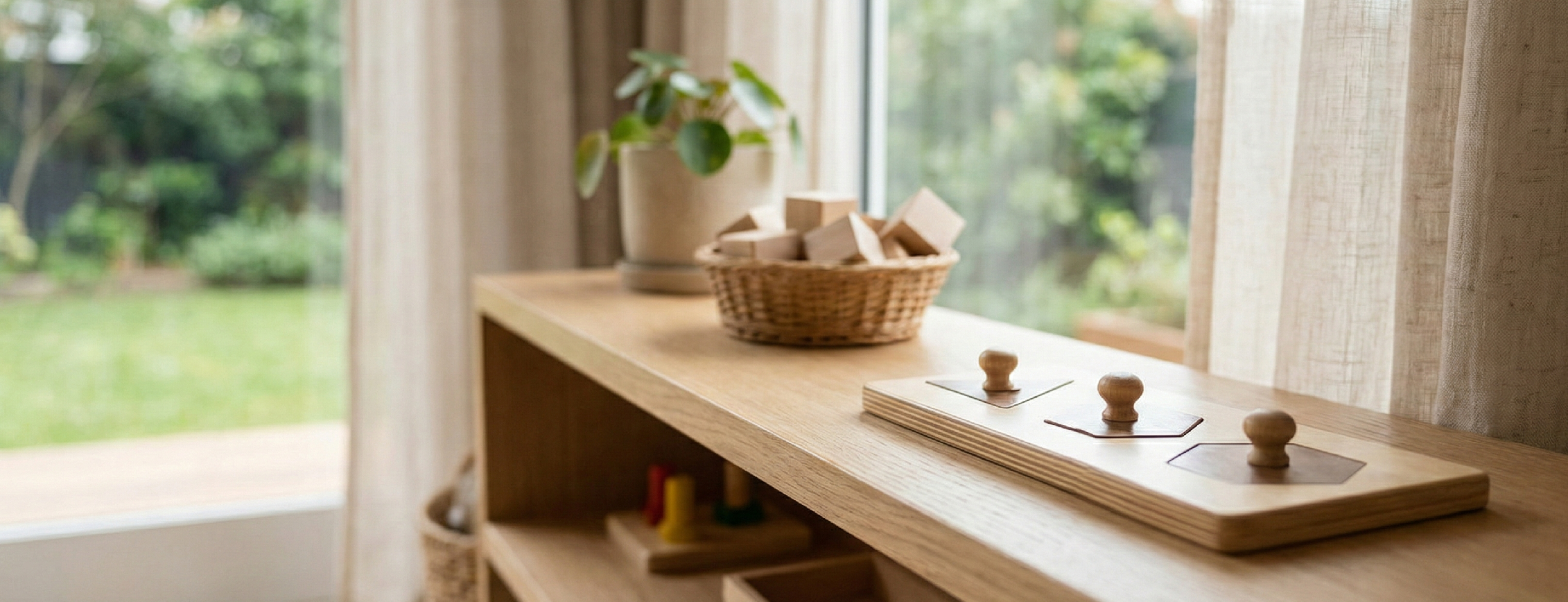
Example 1: Simple Wooden Knobbed Puzzles
Why this is Montessori:
- ✅ Isolates shape and spatial matching
- ✅ Self-correcting (pieces fit only in designated spots)
- ✅ Natural material (wood)
- ✅ Beautiful and well-made (if you choose quality)
- ✅ Invites repetition
- ✅ Based on reality (shapes, animals, or objects as they actually are)
What to look for:
3-6 pieces for beginners, realistic images (not cartoons), substantial wooden construction, pieces with knobs for grasping.
Example 2: Nesting and Stacking Toys
Why this is Montessori:
- ✅ Isolates size relationships and seriation
- ✅ Self-correcting (larger items won’t fit inside smaller ones; unstable stacks fall)
- ✅ Natural material options widely available
- ✅ Invites endless repetition
- ✅ Concrete learning (you can see and feel size differences)
What to look for:
Graduated sizes with clear visual differences, substantial weight, smooth finish.
Example 3: Real Tools at Child Size
Why this is Montessori:
- ✅ Based on reality (these are actual tools, not pretend)
- ✅ Purposeful activity (child contributes to household work)
- ✅ Natural materials (metal dustpan, real wooden broom)
- ✅ Teaches real skills through repetition
- ✅ Self-correcting (floor either gets clean or it doesn’t)
What to look for:
Child-sized but functional broom, real metal dustpan (not toy plastic), small pitcher that actually pours, step stool for accessing counters.
Example 4: Threading and Lacing Activities
Why this is Montessori:
- ✅ Isolates hand-eye coordination and fine motor skill
- ✅ Self-correcting (bead either goes on string or it doesn’t)
- ✅ Natural materials (wooden beads, thick laces)
- ✅ Invites repetition (endless patterns possible)
- ✅ Concrete, tactile learning
What to look for:
Large wooden beads for beginners, thick laces that won’t frustrate, simple threading cards with clear holes.
Example 5: Realistic Animal Figures
Why this is Montessori:
- ✅ Based on reality (accurate representations)
- ✅ Natural material options (wood or high-quality detailed plastic)
- ✅ Invites open-ended imaginative play
- ✅ Supports language development (naming, categorizing)
- ✅ Can be used repeatedly in infinite scenarios
What to look for:
Realistic proportions and coloring, detailed sculpting, weighted enough to feel substantial (not hollow cheap plastic).
The Questions to Ask Before Buying
When you’re trying to decide if a toy is genuinely Montessori-aligned, run through this quick checklist:
1. What does this toy teach?
If you can’t answer in one clear sentence, it’s probably trying to do too much.
2. Will the child know if they’re using it successfully without adult feedback?
Self-correcting materials support independence. Materials that require constant adult validation don’t.
3. Is it made from natural materials, or is there a good reason it’s not?
Plastic isn’t automatically bad, but wood should be the default unless plastic serves a specific purpose better.
4. Will the child want to use this repeatedly?
Novelty toys are fun once. Montessori materials invite mastery through repetition.
5. Does it represent reality, or is it fantasy-based?
For young children (under 3), reality matters. For older children (4+), fantasy becomes appropriate.
6. Is it well-made enough to last?
Quality communicates respect. Cheap construction communicates disposability.
If you can answer “yes” to most of these, the toy is functionally Montessori—regardless of what the label says.
What About “Montessori-Inspired”?
You’ll see this phrase a lot: “Montessori-inspired toy.”
What this usually means:
The toy incorporates some Montessori principles but doesn’t meet all criteria. This isn’t necessarily bad.
Examples of legitimately Montessori-inspired:
- Magna-Tiles (plastic, not wood, but self-correcting, open-ended, invites mastery)
- Quality LEGO sets (plastic, but isolation of spatial reasoning, self-correcting through design)
- Certain board games that isolate turn-taking, counting, or pattern recognition
These aren’t “pure” Montessori, but they align with core principles well enough to be valuable.
Examples of misleadingly “Montessori-inspired”:
- Electronic toys with “educational features”
- Plastic toys in trendy neutral colors (aesthetic without substance)
- Over-complicated activity boards trying to teach everything at once
The “inspired” label is only meaningful if the inspiration actually shows up in how the toy functions.
Do You Have to Be Strict About This?
Here’s the part where I tell you: no, you don’t need to be a Montessori purist.
Your child will not be harmed by owning some toys that don’t meet every Montessori criterion. They will not be developmentally delayed because they have a stuffed animal that’s an unrealistic color.
The goal isn’t perfection. The goal is:
More thoughtful choices. Understanding these principles helps you filter through marketing noise and choose toys that actually support learning.
Fewer, better materials. When you know what makes a toy valuable, you can invest in quality over quantity.
Less clutter. Toys that align with these principles get used repeatedly. Toys that don’t often get ignored. Knowing the difference reduces accumulation.
Your child’s room doesn’t need to look like a Montessori classroom. But understanding what makes those classroom materials effective helps you make better choices for home.
The Bottom Line
“Montessori” on a label means nothing if the toy doesn’t align with the principles.
A toy is Montessori when it:
- Teaches one skill at a time clearly
- Provides its own feedback (self-correcting)
- Uses natural materials when possible
- Is well-made and beautiful
- Invites repeated practice
- Represents reality before fantasy
A toy is not Montessori just because it’s:
- Wooden
- Neutral-colored
- Expensive
- Labeled “Montessori”
- Featured on Instagram
The principles matter more than the label.
When you understand what you’re actually looking for, you’ll find genuinely valuable toys in unexpected places—and you’ll recognize expensive marketing nonsense for what it is.
That’s the real value of knowing what “Montessori” actually means.